Crypto & Finance RSS
Cointelegraph.com News

A federal appeals court upheld the former FTX chief’s conviction, while his bid for clemency from President Donald Trump appears to face steep political odds.

Bitcoin hit $64,000 as SpaceX launched a record-breaking IPO and US-Iran peace deal hopes continued to grow, but doubts over BTC price support remained.
Bitcoinist.com
TL;DR
- The SEC has proposed rescinding Regulation NMS Rules 611 and 610(e), both tied to U.S. equity market structure.
- The proposal is not a crypto rule, and the SEC did not frame it as a blockchain or tokenized-stock measure.
- Industry analysts say the change could matter for tokenized equities because current routing and quote rules are difficult to reconcile with on-chain trading models.
- The proposal is open for public comment and still faces a long rulemaking process before any final change.
The U.S. Securities and Exchange Commission has proposed rescinding two Regulation NMS rules that shape how traditional U.S. equity markets route and display orders, a move that could also become important for the future structure of tokenized stocks.
The SEC’s proposal focuses on Rule 611, known as the Order Protection or Trade-Through Rule, and Rule 610(e), which restricts locked and crossed quotations. These are equity-market-structure rules, not crypto rules, and the SEC’s press release does not describe the proposal as being designed for blockchain markets.
Still, the proposed rollback is drawing attention from digital asset market-structure watchers because tokenized equities and real-world-asset platforms must eventually fit into the same broader securities-market framework.
What The SEC Is Proposing
Rule 611 was adopted in 2005 and generally prevents trading centers from executing trades at prices inferior to protected quotes displayed on other venues. Rule 610(e) deals with locked or crossed quotations, where bids and offers across venues create market structure conflicts.
SEC Chairman Paul S. Atkins said the rules have introduced unintended complexity after two decades of market evolution. The agency said the proposal is intended to simplify traditional equity market structure, reduce trading complexity, and lower costs for market participants.
The SEC estimated that removing the rules could save exchanges, alternative trading systems, broker-dealers, and OTC market makers between $54.2 million and $77 million annually in compliance, monitoring, and routing infrastructure costs.
The proposal will be open for a 60-day public comment period after publication in the Federal Register. That means it is not final, and the market will still have time to weigh in before any rule changes are adopted.
Why Tokenized Stocks Enter The Conversation
The tokenization angle is not part of the SEC’s stated rationale, so it needs careful handling. The possible relevance comes from how on-chain trading systems work compared with traditional equity venues.
Automated market makers, or AMMs, execute trades against liquidity pools using pricing formulas rather than routing each order across conventional venues to check the national best bid and offer. Under a strict trade-through framework, that model can be difficult to reconcile with tokenized versions of U.S. equities.
In other words, if a tokenized-stock AMM executes a trade at a price that does not match protected quotes elsewhere, it could create compliance problems under existing market-structure rules. A shift away from rigid per-trade routing requirements could, in theory, make it easier to design compliant blockchain-based equity trading systems.
That does not mean tokenized stocks suddenly become legal everywhere if the SEC finalizes the proposal. Exchanges, broker-dealers, alternative trading systems, custody providers, and tokenized-asset platforms would still need to satisfy a long list of securities-law requirements.
What Still Needs To Happen
The most important caveat is that the SEC proposal is still a proposal. It must go through the comment process, and the agency could revise, narrow, or abandon parts of it before any final rule is adopted.
There are also remaining exchange-level and FINRA rules that may require separate updates. A Regulation NMS change would not automatically remove every barrier facing tokenized equities or real-world-asset markets.
For crypto investors, the significance is therefore indirect but real. Traditional market-structure rules help determine what kinds of trading systems can legally operate in U.S. securities markets. If those rules become more flexible, the path for tokenized equities may become easier to map.
The SEC is not proposing a crypto tokenization regime here. But by reconsidering older equity-market plumbing, the agency may be opening a broader conversation about what modern, automated, and potentially on-chain markets should look like.
Originally proposed by the U.S. Securities and Exchange Commission at SEC Newsroom
TL;DR
- Kraken says it plans to launch CFTC-regulated perpetual futures for eligible U.S. traders.
- The products will be listed on Bitnomial Exchange, a CFTC Designated Contract Market acquired by Kraken parent Payward.
- Clearing will be handled by NinjaTrader Clearing, doing business as Kraken Derivatives US.
- Initial supported assets are expected to include BTC, ETH, SOL, XRP, ADA, LINK, DOGE, LTC, and AVAX.
Kraken is preparing to launch CFTC-regulated perpetual futures for eligible U.S. traders, a move that could bring one of crypto’s most popular derivatives products into a more regulated domestic market structure.
In a May 29 announcement, Kraken said the products are expected to launch within 30 days for eligible U.S. retail and institutional clients. The perpetual contracts will be listed on Bitnomial Exchange, LLC, a CFTC Designated Contract Market that was recently acquired by Payward, Kraken’s parent company.
Clearing will be handled by NinjaTrader Clearing, LLC, which does business as Kraken Derivatives US and is registered as a Futures Commission Merchant and NFA Member. Kraken said users will be able to trade perpetuals alongside spot, margin, and CME-listed futures through Kraken Pro.
Why Regulated Perpetuals Matter
Perpetual futures are one of crypto’s defining trading products. Unlike traditional futures, they have no fixed expiration date and typically use funding payments to keep contract prices aligned with spot markets. Kraken’s source material notes that its products will use continuous pricing and an eight-hour funding rate.
For years, much of the global perpetual futures market has operated on offshore venues. Kraken cited more than $60 trillion in crypto derivatives perpetual volume in 2025, most of it historically traded outside regulated U.S. venues.
That context is why the CFTC-regulated structure matters. A domestic, regulated perpetuals market could give U.S. traders access to familiar crypto derivatives while keeping the products inside a clearer compliance and supervision framework.
Which Assets Are Included?
Kraken said the initial lineup will include several major crypto assets: BTC, ETH, SOL, XRP, ADA, LINK, DOGE, LTC, and AVAX. That gives the launch a broader market footprint than a Bitcoin-only derivatives product.
The inclusion of assets such as Solana, XRP, Dogecoin, and Avalanche could make the platform more relevant for active traders who already use offshore perpetual markets to manage exposure across large-cap altcoins. It also signals that regulated crypto derivatives in the U.S. are moving beyond Bitcoin and Ethereum alone.
The products are not risk-free simply because they are regulated. Perpetuals can be volatile, leveraged, and sensitive to funding-rate changes. But the availability of a regulated venue may appeal to traders and institutions that have avoided offshore derivatives platforms due to counterparty, compliance, or operational concerns.
A Shift In U.S. Crypto Market Structure
The launch also fits a wider trend: large crypto exchanges are increasingly trying to bring advanced trading products into regulated U.S. channels rather than leaving that activity offshore.
If successful, Kraken’s move could put pressure on other exchanges to expand their regulated derivatives offerings. It may also give U.S. traders a more direct path to products they already use globally, but under a framework overseen by U.S. derivatives regulators.
For the broader market, the key question is whether regulated perpetuals can attract enough liquidity to compete with offshore venues. Liquidity, funding efficiency, fees, and user experience will determine how much trading activity actually migrates.
Still, the launch is an important signal. Crypto derivatives are not disappearing from U.S. markets. They are slowly being rebuilt inside regulated structures, and perpetual futures may now be part of that shift.
Originally published by Kraken at Kraken Blog
NewsBTC
TL;DR
- Kraken says it now supports USDCx deposits and withdrawals on the Canton Network.
- USDCx is described as a Canton-native stablecoin backed 1:1 by USDC locked in Circle’s xReserve on Ethereum.
- Canton is a permissioned, privacy-enabled Layer-1 network built for regulated financial institutions and tokenized real-world assets.
- The move adds another exchange connection to institutional stablecoin and settlement infrastructure.
Kraken has added support for deposits and withdrawals of USDCx on the Canton Network, expanding its stablecoin infrastructure at a time when regulated financial institutions are paying closer attention to tokenized settlement rails.
In a June 11 product update, Kraken said USDCx deposits and withdrawals are now available on Canton. The exchange framed the integration as part of its broader effort to support new stablecoin rails and institutional finance infrastructure.
USDCx is a Canton-native stablecoin. According to the source material, it is minted when users deposit ERC-20 USDC into Circle’s xReserve on Ethereum, with the Canton version backed 1:1 by USDC locked in that reserve. That distinction matters because USDCx is not simply standard ERC-20 USDC on a new exchange page; it is designed to operate natively within Canton’s privacy-focused network.
What Canton Adds To The Stablecoin Stack
Canton Network is a permissioned Layer-1 system built specifically for regulated financial institutions, tokenized real-world assets, and privacy-sensitive financial workflows. Unlike public networks where transaction details are broadly visible, Canton uses a structure described as sub-transaction privacy.
In simple terms, that means only the parties involved in a transaction can see its details, while the system can still support selective disclosure for compliance and regulatory purposes. For institutions, that is a major design point. Banks, asset managers, and market infrastructure firms often cannot expose sensitive transaction data to the entire market.
The Canton model is sometimes described as a “network of networks,” allowing different applications and institutions to interoperate without making every piece of transaction data public. That gives it a different role from open retail-focused chains, where transparency is often treated as the default.
Why USDCx Matters
Stablecoins are already one of crypto’s clearest product-market fits, but most activity still happens across public networks and centralized exchange rails. USDCx is aimed at a different setting: institutional workflows where privacy, compliance, and settlement certainty are central requirements.
By supporting deposits and withdrawals, Kraken gives users a way to move USDCx through its platform rather than treating Canton-native stablecoin activity as isolated infrastructure. The exchange also noted that Canton’s native utility token, CC, is used to pay transaction fees on the network.
The integration does not mean Canton has suddenly become a mainstream retail chain. The more realistic takeaway is that stablecoin infrastructure is fragmenting into specialized environments. Some networks optimize for open DeFi liquidity, while others are being built around regulated institutions and tokenized assets.
Institutional Rails Keep Expanding
The USDCx integration comes as exchanges, stablecoin issuers, and institutional networks compete to define how tokenized cash should move across regulated markets. That competition is no longer only about which stablecoin has the most supply. It is increasingly about where that stablecoin can settle, who can use it, and what privacy or compliance guarantees come with the network.
Kraken’s Canton support is therefore best understood as an infrastructure step rather than a flashy retail launch. It gives market participants another route into Canton-native stablecoin activity and adds exchange connectivity to a network built for regulated finance.
For crypto users, the immediate impact may be narrow. But for the market structure behind stablecoins and tokenized assets, integrations like this show how exchanges are preparing for a future in which digital dollars move across multiple specialized settlement environments.
Originally published by Kraken at Kraken Blog
TL;DR
- Coinbase’s Quantum Advisory Council says post-quantum migration planning should begin before quantum attacks become practical.
- The report estimates about 7 million BTC are quantum-vulnerable because public keys are exposed through legacy formats or address reuse.
- About 1.7 million BTC are said to sit in legacy Pay-to-Public-Key addresses, including early mined and potentially abandoned coins.
- The council frames the issue as a long-term governance challenge, not an immediate emergency.
Coinbase’s Quantum Advisory Council has warned that Bitcoin and other crypto networks need to begin planning for post-quantum migration well before quantum computers can realistically break today’s public-key cryptography.
In a June 11 report titled “Post-Quantum Migration and Abandoned Coins,” the council framed the issue as both a technical migration problem and a governance dilemma. The core question is not only how to move users to quantum-safe addresses, but what the network should do about coins that are never migrated.
The report says no current quantum computer can break the cryptography securing crypto assets today. However, it argues that the risk is strategically important because decentralized ecosystems can take years to coordinate major upgrades, especially when user funds, abandoned wallets, and property rights are involved.
Why Some Bitcoin Is More Exposed
The Coinbase report estimates that roughly 7 million BTC are currently quantum-vulnerable. That figure includes coins in address types where public keys are already visible, as well as coins tied to address reuse, where a public key becomes exposed after a transaction is broadcast.
One especially sensitive category is legacy Pay-to-Public-Key addresses. The report says about 1.7 million BTC are held in these P2PK addresses, where public keys are directly visible. That bucket includes early mined coins, including coins associated with Bitcoin’s earliest history, as well as funds that may be lost or abandoned.
The issue is different from an ordinary software upgrade. Active users can be told to move funds to quantum-safe addresses once suitable signature schemes are ready. Abandoned coins, lost wallets, and dormant early addresses are harder because nobody may be available to move them.
The Governance Dilemma
The council outlined several broad paths. One option is a hard migration deadline, after which non-migrated vulnerable funds could be frozen or burned to prevent future quantum theft. That approach prioritizes network safety but raises serious property-rights questions.
A second option is to preserve rights and do nothing, leaving vulnerable coins untouched. That avoids forced intervention but could allow future attackers to steal exposed funds if quantum capabilities eventually become strong enough.
The report also discusses middle-ground ideas. These include rate-limiting how much can be moved from older addresses in any one block-like time interval, sometimes described as an hourglass mechanism, and using zero-knowledge proofs such as BIP-361 to let users prove ownership of old keys without exposing sensitive information.
Planning Before The Crisis
The council’s practical recommendation is to separate engineering work from the governance fight. In other words, the industry can start building and testing quantum-safe signatures now while still debating how abandoned or vulnerable coins should be handled later.
That distinction matters. Waiting until quantum attacks are imminent would leave networks trying to coordinate technical upgrades, wallet migrations, exchange support, and community governance under pressure. Starting early gives developers and users more room to test systems and avoid rushed decisions.
For Bitcoin holders, the takeaway is not that coins are suddenly unsafe today. It is that long-lived digital assets need long-lived security planning. The more value sits in crypto networks over decades, the more important it becomes to plan for cryptographic transitions before they become emergencies.
Coinbase’s report adds another major voice to that conversation. The debate over abandoned coins will not be easy, but the council’s message is clear: the post-quantum migration question is no longer theoretical enough to ignore.
Originally published by the Coinbase Quantum Advisory Council at Coinbase Blog
HTTP error 429 on https://cryptopotato.com/feed
Failed to fetch feed: https://cryptopotato.com/feed
Failed to fetch feed.
99Bitcoins
THORChain (RUNE) is restarting. The decentralized cross-chain DEX, paused since May 15 after a $10.7M exploit drained one of its vaults, is rolling out v3.19, its official restart release, with mainnet adoption targeted for the first week of June.
RUNE is trading near $0.38–$0.41 at the time of writing, down sharply from pre-exploit levels and -35% over the past 30 days. It has a market cap of roughly $133M, making it the 222nd-largest digital asset.
$RUNE is pushing directly into a heavy resistance zone around $0.382–$0.385.
This is where rejection risk is high.
If bears defend this zone, RUNE can cool off towards $0.370 first, then $0.360–$0.365. pic.twitter.com/rpEV0LXP5V
— ChiefraT (@ChiefraFba) June 9, 2026
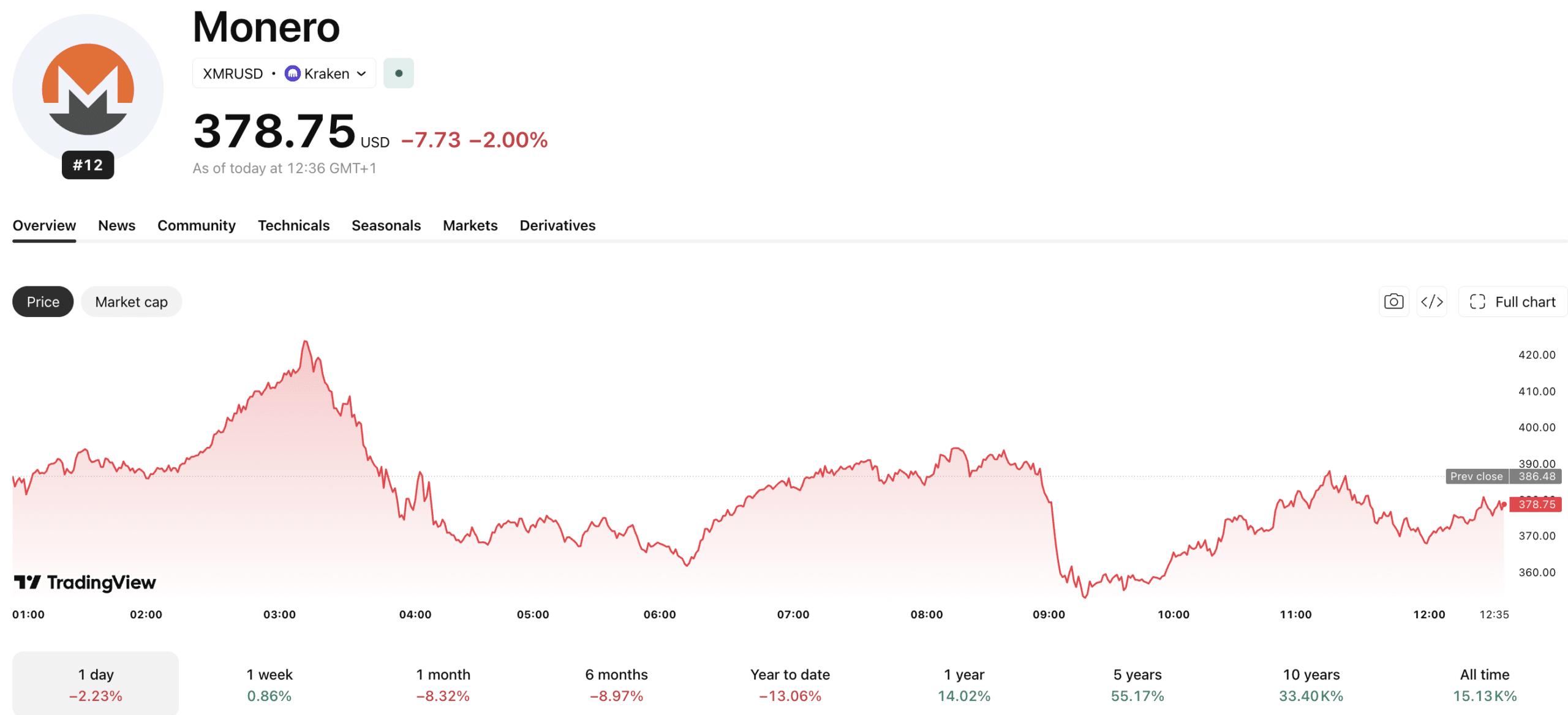
The headline addition waiting in the wings once trading resumes: Monero. XMR is confirmed as the first asset in the DEX queue, giving THORChain a privacy-coin narrative no other major cross-chain protocol can currently match. The community is calling it a renaissance.
Here is the central tension this article unpacks: v3.19 fixes the immediate cryptographic problem and adds a genuinely unique asset. Whether that’s enough to reverse months of RUNE damage depends on execution, and THORChain’s execution track record is currently on trial.
The TSS THORChain Exploit Explained and What V3.19 Actually Fixes
THORChain Has Entered The Final Restart Phase
The excitement is reaching another level.
Today validators are voting to quarantine the compromised vault, one of the final critical security milestones before THORChain can continue toward a full network restart.
This means…
— fincontrarian (@fincontrarian) June 9, 2026
THORChain employs a Threshold Signature Scheme (TSS) where multiple nodes must sign transactions, preventing any single node from moving funds independently.
An attacker exploited a flaw in the GG20 TSS implementation, leveraging undisclosed cryptographic weaknesses. Soda Labs confirmed it was a zero-day vulnerability and required human cryptographers to verify it, as AI models couldn’t replicate the attack.
The rollout of version 3.19 addresses this by patching the TSS library, resolving a ~$10M gap through a governance-approved migration and initiating an 11-stage restart that takes about a week to fully resume operations. Separately, a $700K accounting issue was also addressed.
A controversial decision was to temporarily close-source the TSS library during Soda Labs’ audit. Kenton, a THORChain member, noted that this choice allowed for faster recovery at the cost of transparency, sparking debate within the community. The library is expected to return to open-source status in upcoming releases.
EXCLUSIVE: Earn $10 USDC Via Binance Sign-Up
Why Monero First and Whether XMR Can Move the RUNE Needle
(SOURCE: TradingView)
Monero’s prominent position in the DEX queue stems from the lack of trustless, non-custodial options for XMR users, especially since major centralized exchanges have delisted it. If THORChain enables native XMR swaps, it could dominate permissionless Monero liquidity, allowing it to set a starting fee of 50 bps due to its pricing power.
For RUNE holders, increased Monero volume translates to greater demand for RUNE since every swap settles through it. This has sparked the “THORChain renaissance,” in which the integration of Monero is seen as a significant step beyond mere recovery. However, the protocol’s prior issues with privacy-asset integrations raise concerns about its ability to safely manage high-privacy L1S.
While Monero volume is expected to be moderate initially, the broader roadmap includes other assets such as Zcash and Polygon. Monero serves as the opening act for THORChain, not the entire show.
EXPLORE: Best Crypto Presales With Asymmetric Upside in the Current Market
The post THORChain V3.19 Is Live: Monero Is First Up But Can it Save RUNE? appeared first on 99Bitcoins.
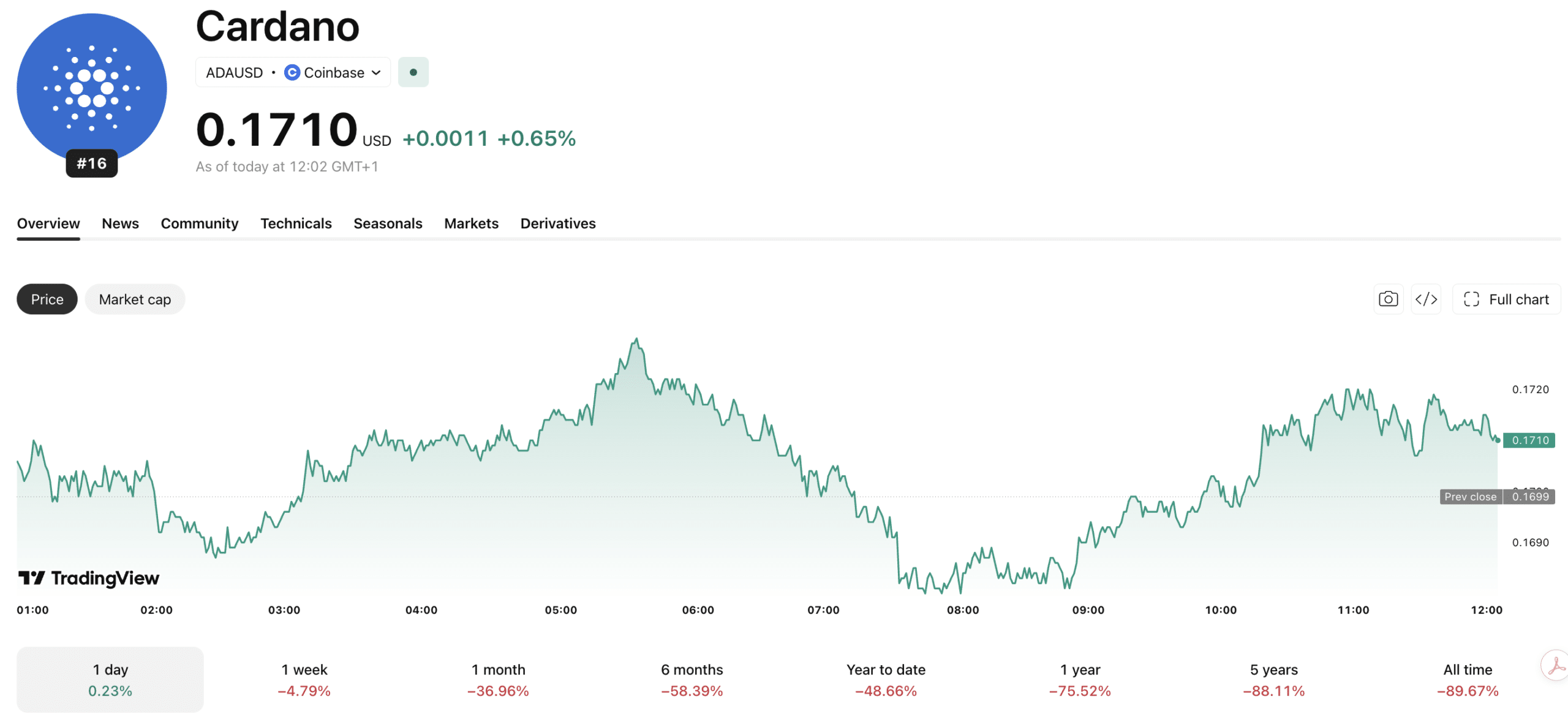
Charles Hoskinson has initiated a ‘great migration’, moving the Cardano core discussions from X to dedicated Discord channels to escape the ‘drama, lies, and endless rage’ of social media.
Critics argue this is censorship masquerading as community management, highlighting the irony of a decentralized project steering discussions into a private, moderated space.
Dropping by to let everyone know that I spoke with @phillip_pon and we are working out a plan to create a discord for a great migration of the Cardano community from X. We can have happy, positive, well-moderated channels and leave behind the drama, lies, endless rage, and…
— Charles Hoskinson (@IOHK_Charles) June 11, 2026
This move raises questions about whether it promotes healthier engagement or serves as a means for the founder to avoid accountability, especially after the cancellation of the Cardano 2026 Summit and the unresolved funding debates.
Hoskinson’s statement about creating ‘well-moderated’ channels is seen differently by supporters, who view it as a space for productive dialogue, while critics fear it could silence dissent. This ambiguity poses a significant issue for the community.
(SOURCE: TradingView)
What Hoskinson Actually Announced Regarding Cardano and Why the Details Matter
The plan involves more than just leaving the current platform. Cardano’s governance discussions, development coordination, and ecosystem updates will transition to a new Discord server.
AMA sessions with Hoskinson will move to either there or Midnight Discord. X will still be used for livestreams due to Hoskinson’s significant following, but interactive engagement will be moderated.
This migration, coordinated with Phillip Pon of EMURGO, indicates a structured approach rather than just Hoskinson’s personal views, although the backlash to the move is growing.
Notably, Hoskinson has mentioned that his X account may be managed by AI curators and human moderators in the future, raising questions about the optics of replacing a founder’s voice with a bot.
Despite the burned Genesis keys limiting Hoskinson’s control over the protocol, his informal influence remains significant. Moving discussions to a controlled server can affect community accountability beyond governance keys alone.
DISCOVER: Best Meme Coin ICOs to Invest in 2026
Is Cardano’s ‘Great Migration’ a Betrayal of Decentralization?
JUST IN: @CARDANO FOUNDATION IS STEPPING INTO A MORE ACTIVE ROLE TO DRIVE ADOPTION
Source @DefiantNews pic.twitter.com/Il10ZVnl1a
— OxManuel (@ManuelOnchain) June 12, 2026
Here is a condensed version of the text: Hoskinson’s strongest argument is that X’s engagement algorithm favors outrage over nuanced discussion, thereby overshadowing technical and governance debates with bad-faith attacks.
One community member criticized Cardano’s isolation from public discourse, arguing that it undermines confidence in governance. Another noted that shifting discussions to a moderated platform raises concerns about decentralization.
The timing of this announcement coincides with significant grievances within the crypto community regarding Cardano’s direction, making the move seem like a retreat from accountability rather than a productivity improvement.
The distinction between promoting quality discussions and filtering out challenging questions becomes problematic in a Discord-centric governance model.
EXCLUSIVE: Earn $10 USDC Via Binance Sign-Up
Hoskinson’s Track Record: The Pattern Is Consistent
This is not the first time Hoskinson’s reaction to public pressure has made headlines. His involvement in the Henry Nowak controversy drew criticism for his aggressive public engagement and for framing critics as the problem.
ADA treasury management has faced scrutiny for years, with a consistent pattern emerging: loud public responses and the dismissal of critics.
The ‘great migration’ fits this trend, shifting the conversation toward a more controlled environment rather than addressing governance critiques such as treasury issues or project closures.
For ADA holders, the critical question is whether this approach undermines Cardano’s long-term credibility. A founder who reframes criticism rather than addressing it risks weakening accountability. This is an important consideration.
EXPLORE: Best Crypto Presales With Asymmetric Upside in the Current Market
The post Charles Hoskinson Moving Cardano Off X: Is He Running From Criticism? appeared first on 99Bitcoins.
Crypto Briefing
Polymarket's sponsorship of Aurora at IEM Cologne 2026 highlights the growing intersection of crypto markets and esports, raising regulatory questions.
The post Aurora’s Polymarket sponsorship gets its first Major spotlight at IEM Cologne 2026 appeared first on Crypto Briefing.
LitVM's launch could redefine Litecoin's role in the crypto ecosystem, potentially boosting its utility and attracting more institutional interest.
The post Litecoin whale wallets grow 7% as LitVM sparks renewed interest appeared first on Crypto Briefing.
crypto.news
Tennessee resident Misam Abidi faces federal charges over an alleged $1.9 million crypto Ponzi scheme involving fraud, loans, and tax violations.
The Solana price has started to move again, with weekly gains above 4%. This recent Solana price trend comes at a time when the SpaceX IPO token, SPCX, has gone onchain on Solana. This new momentum has made market participants…
Coinlabz
The post Buy Flights and Airline Tickets With Crypto appeared first on Coinlabz.
The post Travel Companies That Accept Crypto Payments appeared first on Coinlabz.
BitRss - Crypto World News
Bitcoin’s largest buyers are no longer behaving like a reliable backstop for the largest cryptocurrency. The exchange-traded funds, public-company treasuries, and Bitcoin-linked equities that helped define the market’s institutional era are showing signs of strain, just as the world’s...
Coinbase's new vault lends USDC against Ethena-backed collateral for higher yields, marking the first product in the Coinbase-Ethena collaboration.
https://dumbbell-exercises.com/

The post บาคาร่าออนไลน์ เว็บตรง อันดับ 1 เล่นบาคาร่าสด ปลอดภัย จ่ายจริง appeared first on https://dumbbell-exercises.com/.

The post บาคาร่าทุนน้อย เล่นยังไงให้ได้กำไร รวมเทคนิคทำเงินที่มือใหม่ต้องรู้ appeared first on https://dumbbell-exercises.com/.
Bitcoinik

Every time you pay online, your data hops between a series of systems – banks, payment providers, and third-party processors. Every step adds convenience, but also creates more points of exposure
As digital payments become a daily habit, users are starting to ask a different question: not just how fast or easy a transaction is, but how private and secure it really is. This is where cryptocurrencies change the rules — offering an alternative way for transactions to be processed, protected and controlled.
Transaction Privacy
Traditional payment systems often require users to share their personal and financial data with a myriad of parties – banks, payment providers, and sometimes intermediaries. This means more places where data is stored, processed, and potentially exposed. Cryptocurrency transactions work differently. Instead of personal data, they use wallet addresses, which means that less sensitive information is involved in the process.
Transactions on public blockchains are visible, but not directly associated with personal identity. For many users, this provides a more private way of transferring money than traditional systems.
Blockchain Payment Security
Security is one of the main reasons cryptocurrencies have gained users’ trust.
The blockchain networks rely on decentralized systems, which means the transactions are verified by a number of nodes instead of one institution. Once a transaction is made, it is not easy to change or reverse.
This structure makes crypto payments resistant to fraud, unauthorized changes, and many types of system failures, which can affect centralized platforms.
Security also depends on the way users manage their wallets and access credentials. Contemporary platforms reduce risks by providing secure settings, user-friendly interfaces and additional security measures.
More Control Over Your Money
One of the biggest changes with crypto is the amount of control users have over their own money. In traditional systems, access to funds can depend on banking hours, approvals, or third-party processing. With crypto, users can send, receive, and manage their assets directly, without intermediaries.
This is even more practical with integrated solutions. For example, Parimatch Multiwallet offers users the ability to manage fiat and crypto balances together in one account, making it easier to transfer funds, track and control transactions without switching systems.
This means users can be more flexible in how and when they use their money, as they don’t have to rely on external processes.
Final Thoughts
Privacy, security, and control are becoming essential parts of the digital payment experience. With platforms making access and usability easier by the minute, crypto is no longer just an alternative — it’s becoming a practical and trusted option for everyday financial activity.
The marketing industry has a vocabulary problem.
Ask any CMO about their distribution strategy and they will describe their content calendar. Ask about their channel mix and they will explain their paid media budget. Ask how they ensure their brand shows up inside the AI-generated answers their customers are already reading and most will go quiet.
“Distribution” has become a synonym for “posting.” That is why most brands are invisible.
Mohit Ahuja has been sitting with this problem since a campaign he ran at Cultbike.fit did something he did not fully understand until he looked at the data underneath it. His team had built a genuinely good piece of content: comedian Atul Khatri, sharp creative, the kind of video that earns internal praise before it earns external reach. It performed. It outperformed.
The creative quality was not why.
When Ahuja ran the analysis, distribution placement explained the outcome. The video had not found its audience because it was good. It found its audience because of precise, deliberate decisions about where and how to put it. “Great creative was necessary but not sufficient,” he says. “It was the distribution that turned a funny video into a conversation people were having at their offices.”
He spent the next few years asking a question nobody in the industry had a satisfying answer to: if distribution is what actually drives outcomes, why does no platform exist to aggregate it?
The Gap That Should Not Exist
Consider what has been built for every other part of the marketing function.
Content creation: dozens of tools, including now AI tools that generate unlimited output at near-zero cost. Paid advertising: entire platforms with sophisticated targeting, real-time bidding, and attribution infrastructure. CRM, email, analytics, social scheduling, all of it has been systematised, consolidated, and made accessible to teams of every size.
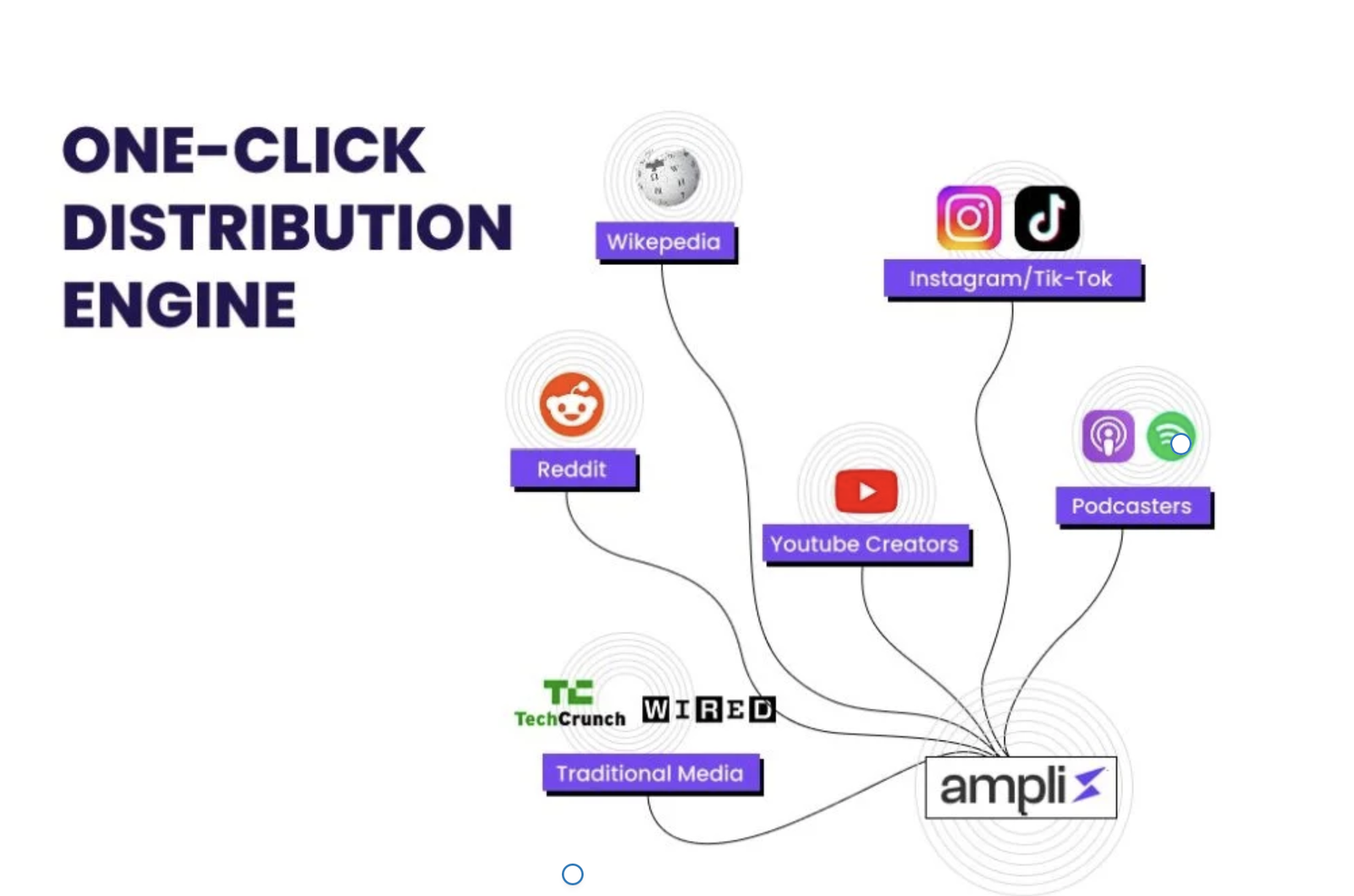
Distribution has not. The creator economy, newsletter ecosystem, podcast network, Reddit community, and Answer Engine landscape, the actual places where brand reputation forms and purchase decisions are made, remain a fragmented collection of individual relationships managed through emails, spreadsheets, and agency retainers, with no unified layer sitting above them.
This is the gap Ampli5 launched into this week. The company, based in Singapore and now live at ampli5.ai, is the first distribution aggregator for brand marketing. A single platform that connects brands to YouTube creators, newsletter operators, podcast networks, TikTok influencers, X communities, Reddit, programmatic inventory, and AI-answer visibility, and routes intelligently across all of them based on where the audience actually is.
That category, distribution aggregator, did not exist before this week. That is not positioning language. It is a description of the market.
Why AI Made This the Only Bet Worth Making
The arrival of AI content tools did not create the distribution problem. It made the cost of not solving it terminal.
When content was expensive, creative quality was a natural differentiator. Teams with resources had an edge. AI collapsed that asymmetry. Every competitor now has access to the same production capability. When everyone is producing at volume, volume is not an advantage. Creative quality, always difficult to sustain, becomes nearly impossible to maintain as a moat when the baseline has been raised across the entire market.
What AI cannot generate is distribution reach. The accumulated presence across the channels where your audience actually forms opinions, the creator relationships, the newsletter placements, the community trust, the answer engine visibility, takes time and operational sophistication to build. It cannot be prompted into existence.
Ahuja’s framework for this, what he describes as the infrastructure layer that sits between brands and the fragmented distribution landscape, is laid out in full at his blog. The essay makes the case for why distribution should be thought of as a utility rather than a vendor relationship, and why no one had built that utility until now.
The Aggregator Advantage
The Distribution Atlas, Ampli5’s data layer that maps where a brand’s target audience actually concentrates across the internet, is what makes the aggregator model work in practice. Before a campaign launches, the Atlas identifies where the density is. The platform then routes to those concentrations rather than broadcasting broadly.
The difference is the difference between finding your customer and hoping your customer finds you.
Rajat, CMO at Stader Labs, described the result concisely: “With Ampli5, we reduced our go-to-market timeline by two weeks.”
Two weeks on a launch cycle is not a marginal improvement. It is a structural change to how a growth team operates.
What Comes Next
Ampli5 is onboarding brand partners by invitation. The harder tests, whether the Atlas holds its predictive accuracy across categories, whether the aggregator model scales beyond D2C and fitness, whether attribution survives contact with enterprise requirements, are still ahead.
But the founding insight is not in question. The marketing stack has everything except the one layer that determines whether any of it works. The brands that have figured this out are already competing differently. The ones still conflating content production with distribution strategy are producing more content into the same invisible void.
The first distribution aggregator is live. The category is being created now, not later.
The early movers will be very hard to catch.
Mohit Ahuja is the founder and CEO of Ampli5. The platform is live at ampli5.ai.
Crypto News Alerts: Bitcoin, Ethereum & Cryptocurrency News
In early 2026, Polygon Labs announced $250 million in acquisitions of Coinme and Sequence to expand its stablecoin payments infrastructure. Coinme provides licensed US fiat on- and off-ramps with a nationwide retail footprint, while Sequence adds enterprise wallet infrastructure and one-click cross-chain transaction capabilities. Together, these additions strengthen Polygon’s position in regulated, production-grade stablecoin payments.
Bybit has introduced an exclusive Cashback Booster for new Bybit cardholders, offering 10% cashback on lifestyle spending for a full 30 days. The cashback is applicable to crypto-funded transactions across eligible merchant categories, including restaurants, travel, transport, fashion, and beauty.
The Coins Post
Caroline Crenshaw’s departure from the SEC on January 2 marks a turning point for crypto regulation in Washington. The longtime cryptocurrency skeptic’s exit leaves the commission operating under a 3-0 Republican majority—a historic shift that clears the way for Paul Atkins’ pro-innovation agenda to move forward without meaningful internal opposition.
What Changed at the SEC
Crenshaw spent over a decade at SEC agency, consistently raising concerns about cryptocurrencies, digital assets and investor protection.
Her exit coincides with the broader regulatory reorganization under the Trump administration, which has explicitly positioned itself to make the U.S. the “crypto capital of the world.”
The commission now operates with fewer members than authorized, as Trump hasn’t yet filled the vacant seats—a strategic pause that effectively gives the Republican-majority commissioners free rein on policy.
Why This Matters Right Now
The timing couldn’t be sharper. SEC Chair Paul Atkins has already signaled plans to introduce an “innovation exemption” that would let crypto startups test new products under lighter regulatory requirements, provided they meet basic consumer protections. [3][7] That proposal was expected within 30 days of December 2, meaning it could arrive any moment. With Crenshaw gone, there’s no institutional voice pushing back on the exemption’s scope or implementation details.
The broader regulatory picture is also shifting. The Senate is scheduled to hold hearings in January on the CLARITY Act—landmark legislation designed to end years of turf warfare between the SEC and CFTC by clearly dividing jurisdiction over different crypto products. [3][7] White House crypto adviser David Sacks said in December the bill is “closer to passage than at any point in the past.” [3] These aren’t minor procedural tweaks. They represent a fundamental reordering of how Washington approaches digital assets.
What’s Next
The real action starts immediately. Watch for the innovation exemption announcement—it could drop with minimal fanfare. Then track the Senate hearings on CLARITY in January. If that bill moves to a floor vote and passes, the crypto industry will have concrete answers about regulatory jurisdiction for the first time in years. Markets have been pricing in regulatory clarity for months. Crenshaw’s departure removes one of the last obstacles to delivering on it.
The post SEC’s Pro-Crypto Shift Accelerates as Key Skeptic Crenshaw Exits appeared first on The Coins Post.
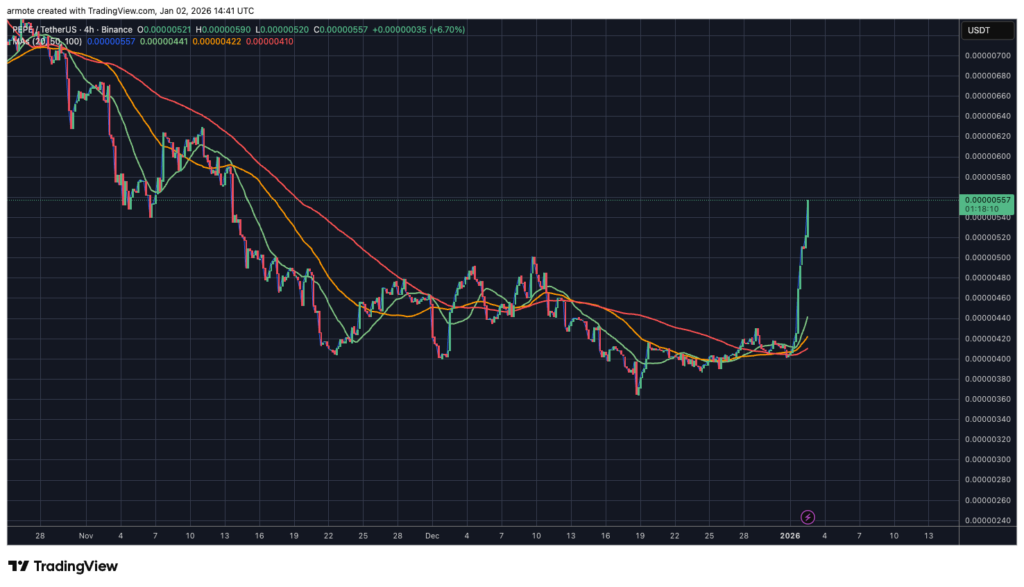
PEPE just ripped 26% higher on January 2, hitting $0.000005106 as trading volume exploded past $800 million.
That’s no thin pump—retail’s back, Robinhood holders sitting on 8.3% of supply, and a Hyperliquid whale named James Wynn dropped a bombshell prediction: $69 billion market cap by end-2026. If you’re trading memes, this is your wake-up call. Why now? New year FOMO meets bold calls in a market where BTC chills at $88k.
On-Chain Breakdown
PEPE’s ERC-20 on Ethereum. No fancy DeFi twist here—just pure meme liquidity. Volume spiked 370-400% in 24 hours, open interest jumped 82% to $446.5 million on derivatives. RSI hit 67, screaming bullish momentum after breaking $0.0000042 resistance.
Whales aren’t dumping. That official “We ride at dawn” tweet lit socials on fire—crypto Twitter’s buzzing. Supply’s fixed at 420.69 trillion tokens. If Wynn’s right, that’s $0.000164 per PEPE. Math checks out. But Ethereum gas? Still a killer for small trades.
Market Mayhem
Total crypto cap up 1.07% to $2.99T. BTC +1.21% at $88,765, dominance slipping to 59.22%—alts eating its lunch. PEPE led top gainers, outpacing Story (+25%) and Mog. Volumes hit $164B market-wide. No massive liqs reported, but meme sector OI surging means leveraged degens are in.
BTC’s post-halving year ended red for first time ever—down 6% in 2025 despite $126k ATH. ETFs pulled $348M, but macro liquidity rules now. PEPE doesn’t care—it’s riding retail hype while big boys consolidate.
Reactions Pour In
James Wynn, that Hyperliquid ser, straight-up said PEPE hits top meme status like SHIB did last cycle—if bull market holds. “We ride at dawn” from @pepe went viral. Community’s pumping: “PEPE to the moon” threads everywhere. No official team—it’s anon dev vibes.
Exchanges? Volumes exploding on Binance, MEXC. No rugs spotted. Traders on X calling for $0.000026 ATH retest. Sarcasm alert: Great timing for memes while BTC whales accumulate quietly. Holders care about flips, not halving myths.
But is this sustainable? Meme pumps fade fast.
Security Smarts for Degens
Don’t get rekt. PEPE’s been rugged before—no premine, but watch whale wallets. Use hardware for big bags; software wallets fine for sub-$1k. Check Etherscan for suspicious transfers. Avoid leverage over 5x—OI spike means liqs incoming on pullbacks.
Actionable: Set stops below $0.0000042. DCA if you believe Wynn. DYOR on Hyperliquid perps for leverage without CEX KYC. Phishing’s rampant post-pumps—double-check links. If you’re aping memes, keep it under 5% portfolio. Skin in the game matters, but don’t YOLO rent money.
Eyes on This
$0.000005 close today flips structure fully bullish. Watch BTC dominance drop—alts feast. Wynn’s $69B? Ballsy. If ETH L2s cut fees, PEPE volumes could 10x. Macro: Fed liquidity print January 2nd might juice risk assets.
Pullback to $0.0000045? Buy dip. Break $0.000006? Targets $0.00001 easy. Meme season back? You tell me. Trade smart—2026’s rewriting rules.
The post PEPE Explodes 26% in 24 Hours—James Wynn Calls $69B Market Cap by Year-End, Meme Degens Pile In appeared first on The Coins Post.
U.Today - IT, AI and Fintech Daily News for You Today
Japanese energy consulting firm Remixpoint is doubling down on its aggressive corporate treasury strategy.
Bitcoin has a high chance of dropping to $50,000 before seeing a major breakout to $100,000 according to predictions from Kalshi traders.
CurrencyCrypt
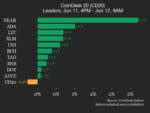
Cronos (CRO), down 1.4% from Thursday, was also an underperformer.


Metaplanet will acquire Siiibo Securities and rename it Metaplanet Securities as it builds out Project Nova, its Bitcoin-centric finance strategy in Japan.
Metaplanet announced on Friday that it has agreed to acquire Siiibo Securities in a 2.1 billion yen ($13.1 million) deal to form a securities arm.
The Tokyo-listed Bitcoin (BTC) treasury company said it entered into a share transfer agreement to acquire 100% of the Japanese securities company, a licensed financial instruments business operator. After closing, expected in July, Siiibo Securities will become a wholly owned subsidiary and be renamed Metaplanet Securities.
Metaplanet CEO Simon Gerovich said the acquisition is the first step in Project Nova, the company’s strategy to build a Bitcoin-centric financial ecosystem in Japan.
Read more
Crypto News Australia
- Bitcoin traded back above US$63,000 (AU$89,460) on June 11, rising about 2.5% even as Iran shut the Strait of Hormuz and oil spiked.
- WTI crude surged above US$91 (AU$129) a barrel after the closure of a waterway that carries roughly 20% of the world’s oil supply.
- The rebound held despite U.S. producer prices rising 5.1% year-on-year, their fastest pace since October 2022, underscoring Bitcoin’s resilience to macro shocks.
Bitcoin (BTC) pushed back above US$63,000 (AU$89,460) on June 11, gaining roughly 2.5% on the day even as Iran closed the Strait of Hormuz and crude oil surged, in a show of resilience against a sharp escalation in geopolitical and inflation risk.
Iran shut the strait “until further notice” following attacks on U.S. infrastructure in the Gulf, choking a waterway that handles roughly 20% of the world’s oil supply and substantial volumes of liquefied natural gas.
WTI crude jumped above US$91 (AU$129) a barrel in response, reviving fears of an energy-driven inflation shock just as price pressures were already building across the U.S. economy.
Read more: Hyperliquid’s Massive Buybacks and Strong Cash Flow Fuel Growing Bullish Momentum
Markets Caught Between Two Risks
Rather than selling off, Bitcoin extended its rebound, trading near US$63,200 (AU$89,744) and brushing aside data showing U.S. producer prices up 5.1% year-on-year, the steepest since October 2022, and consumer prices up 4.2%, the highest since April 2023.
Trading firm QCP Capital characterised the backdrop as unusually fraught, noting that markets were “being forced to price both military escalation risk and potential energy disruption” at once. The firm’s view framed risk assets as caught in an awkward position rather than clearly bullish or bearish.
President Donald Trump sharpened the tension further, warning Iran would be hit “very hard” and posting that the US would be “taking Kharg Island, and other oil infrastructure points” to “assume total control of their Oil and Gas Markets.”
Despite the noise, technical traders focused on Bitcoin’s structure. Analyst Michaël van de Poppe identified US$63,300 (AU$89,886) and US$65,800 (AU$93,436) as breakout zones that could act as springboards for a further move higher, while flagging US$60,000 (AU$85,200) as the key support to defend.
Read more: Dormant 2011 Bitcoin Wallet Awakens, Undercutting $285 Billion ‘Abandoned BTC’ Lawsuit
The post BTC Holds Steady as Iran Closes Strait of Hormuz and Oil Surges Past $91 appeared first on Crypto News Australia.
- Coinbase’s Independent Advisory Board on Quantum Computing and Blockchain urged developers to start migrating Bitcoin and Ethereum to quantum-safe cryptography immediately.
- The council estimated that roughly 7 million Bitcoins sit in addresses with exposed public keys, including coins linked to Satoshi Nakamoto and lost-key wallets.
- Its report flagged an unresolved debate over what to do with crypto in addresses whose owners never migrate, outlining three competing approaches.
Coinbase’s Independent Advisory Board on Quantum Computing and Blockchain urged the crypto industry on June 11 to begin migrating Bitcoin, Ethereum, and other networks to quantum-safe cryptography immediately, arguing that uncertain timelines are no reason to delay the work.
The council, an independent body Coinbase established in January, released a report warning that the technical migration to post-quantum security will take years of coordination across decentralised networks and should not wait for consensus on the industry’s hardest open questions.
No quantum computer can break blockchain cryptography right now. The crypto community needs to start preparing now rather than debating exactly when the threat will arrive.
 Coinbase’s Independent Advisory Board on Quantum Computing and Blockchain
 Read more: Solana Institute Pushes Senate to Preserve Developer Protections in CLARITY Crypto Bill
Millions of Coins at Risk
The board estimated that roughly 7 million Bitcoins sit in addresses with exposed public keys or reused addresses, the category most vulnerable to a future quantum attack. Many of those coins are believed to belong to Satoshi Nakamoto or to wallets whose owners long ago lost their keys.
Research cited by the council warned that a cryptographically relevant quantum computer capable of cracking elliptic-curve signatures is likely to arrive by 2030 or earlier, though no firm date exists. The board’s members are drawn from Stanford University, the University of Texas at Austin, Bar-Ilan University, the Ethereum Foundation, Eigen Labs, and UC Santa Barbara, where professor and ACM Fellow Dahlia Malkhi co-authored the paper.
The report laid out three competing approaches: freezing or burning vulnerable coins after a deadline, doing nothing and leaving the choice to users, or middle-ground measures such as limiting how many vulnerable coins can move per block or accepting special cryptographic proofs in place of legacy signatures.
Read more: OpenAI’s Next Big Bet: Turning ChatGPT Into an AI Super App
The post Coinbase’s Quantum Council to Crypto: Start Preparing Now, Don’t Wait for Consensus appeared first on Crypto News Australia.
CoinGeek
A poll reveals that 56% of Canadians back banning digital asset ATMs, while some say better education may improve public perception of cryptocurrencies.
The post Most Canadians back crypto ATM ban, poll finds appeared first on CoinGeek.
The GenAI Summit Philippines 2026 focused on AI strategies for business success, featuring TP's live demo of AI agents enhancing customer experiences.
The post TP in the Philippines says AI success hinges on ‘execution muscle,’ decades of operational expertise appeared first on CoinGeek.
HTTP error 403 on https://ambcrypto.com/feed
Failed to fetch feed: https://ambcrypto.com/feed
Failed to fetch feed.
Decrypt
Anthropic's AI survey showed Americans are afraid of job losses, hopeful for health breakthroughs, and distrustful of firms behind the tech.
Participants were refunded and did not receive shares in the record-breaking SpaceX IPO from Elon Musk's rocket company.
HTTP error 429 on https://cryptoslate.com/feed
Failed to fetch feed: https://cryptoslate.com/feed
Failed to fetch feed.
HTTP error 410 on https://magazine.cointelegraph.com/feed
Failed to fetch feed: https://magazine.cointelegraph.com/feed
Failed to fetch feed.
Bitcoin Magazine
Bitcoin Magazine
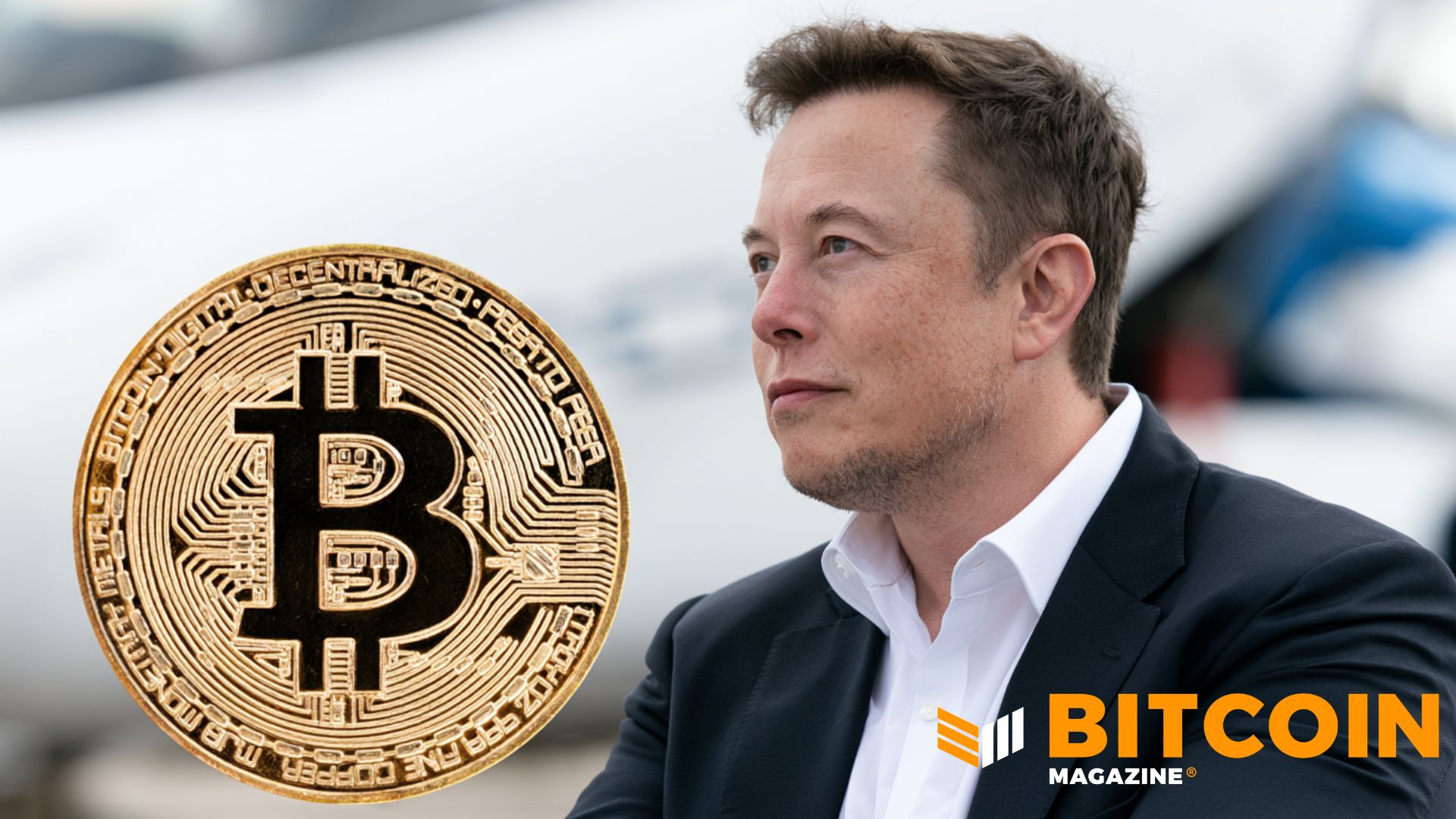
SpaceX Officially Joins Public Bitcoin Leaderboard as 8th Largest Holder With 18,712 BTC
Elon Musk’s SpaceX launched trading on the Nasdaq today under the ticker SPCX — and it didn’t arrive empty-handed.
The company officially entered the public Bitcoin treasury leaderboard as the 8th largest holder with 18,712 BTC, a position that had been building for years before its historic IPO debut confirmed the full size of the stash.
SpaceX’s S-1 filing with the Securities and Exchange Commission first disclosed the 18,712 BTC position back in May, valued at approximately $1.29 billion at the time of filing.
The total cost basis was reported at $661 million — an average acquisition price of roughly $35,324 per coin — suggesting the company began accumulating Bitcoin in late 2023 or earlier. At today’s prices near $63,000, the position is worth approximately $1.19 billion.
The disclosure somewhat surprised the market. Blockchain analytics firm Arkham Intelligence had previously tracked SpaceX’s holdings as low as 6,095 BTC, and the BitcoinTreasuries.net May 2026 Corporate Adoption Report noted that its pre-IPO private estimate stood at just 8,285 BTC.
JUST IN: Elon Musk's SpaceX officially becomes 8th largest public Bitcoin holder with 18,712 BTC
— Bitcoin Magazine (@BitcoinMagazine) June 12, 2026pic.twitter.com/04n3AyFC3T
The actual confirmed figure — more than double those estimates — made SpaceX’s reveal the second-largest Bitcoin treasury disclosure of May, trailing only Strategy’s 25,404 BTC in monthly purchases and accounting for more than one-third of all public treasury growth before sales.
“We expect SpaceX to rank among the top ten publicly traded Bitcoin treasuries after its anticipated June 12 IPO,” BitcoinTreasuries.net wrote in its May report — a forecast that has now materialized.
The live leaderboard, updated as of June 11, confirms SpaceX at rank #8, slotting in just behind Strive (19,032 BTC at #7) and just ahead of Coinbase Global (16,492 BTC at #9).
SpaceX shares debut higher than initial pricing
The IPO itself is historic, even without the Bitcoin angle.
SpaceX priced its shares at $135 on June 11, raising roughly $75 billion and valuing the company at about $1.75 trillion.
Reports now indicate the stock could debut at $171 per share with other reports saying $155 a share. At that price, SpaceX’s valuation would climb to approximately $2.2 trillion, potentially making Elon Musk the world’s first trillionaire.
The listing, led by Goldman Sachs and Morgan Stanley, ranks as one of the largest stock market debuts in U.S. history, surpassing Saudi Aramco’s $29 billion IPO in 2019.
The timing of SpaceX’s entry into the public crypto arena is notable given broader market headwinds. Bitcoin has shed more than 50% from its all-time high above $126,000, hovering around $64,000 in recent sessions, with spot Bitcoin ETFs bleeding $2.26 billion in outflows over two weeks.
Still, SpaceX’s Bitcoin position appears to be a long-term balance-sheet allocation rather than a trading posture. The S-1 stated: “The Company has ownership of and control over its digital assets, which consist of Bitcoin, and utilizes, and expects to continue to utilize third-party custodians to hold its Bitcoin.”
Analysts at Grayscale noted that SpaceX is poised to become the most valuable public company holding Bitcoin by market capitalization — even as Strategy remains the largest by coin count with over 843,000 BTC.
This post SpaceX Officially Joins Public Bitcoin Leaderboard as 8th Largest Holder With 18,712 BTC first appeared on Bitcoin Magazine and is written by Micah Zimmerman.
Bitcoin Magazine

Sam Bankman-Fried Loses Appeal to Overturn FTX Fraud Conviction
One of Sam Bankman-Fried’s last credible paths to freedom closed Friday as a federal appeals court upheld his fraud conviction and 25-year prison sentence, ruling that the case against him was, in the court’s own words, “conservatively stated, robust.”
A three-judge panel of the Manhattan-based 2nd U.S. Circuit Court of Appeals handed down the 42-page opinion on June 12, rejecting every argument Sam Bankman-Fried’s legal team advanced to undo the November 2023 conviction that cemented one of the largest financial collapses in crypto history, according to Reuters.
At the heart of the appeal was a claim that the U.S. District Judge Lewis Kaplan had stripped Sam Bankman-Fried of a fair defense by barring evidence that FTX held enough assets to cover customer withdrawals.
Defense attorney Alexandra Shapiro told the appellate panel in November 2025 that “Mr. Bankman-Fried’s trial was fundamentally unfair because the jury only got to hear one side of the story.”
Prosecutors countered that Kaplan’s ruling was correct: fraud charges hinge on misappropriation, not on the possibility that assets could have covered liabilities under different circumstances. The appellate panel agreed, finding the trial court’s evidence rulings sound and the government’s case against Sam Bankman-Fried overwhelming.
How FTX Fell
The exchange, once valued at $32 billion, collapsed in November 2022 once it was exposed that the balance sheet of Alameda Research — Bankman-Fried’s affiliated hedge fund — was built on FTX’s own exchange token rather than independent assets. The disclosure triggered a customer run that ripped open an $8 billion hole in FTX’s accounts.
Three of Bankman-Fried’s former deputies — Alameda CEO Caroline Ellison, FTX co-founder Gary Wang, and engineering head Nishad Singh — each pleaded guilty and testified against him. Ellison, the trial’s star witness, told jurors Bankman-Fried gave her the instruction to divert customer deposits to Alameda to repay loans from crypto lenders. “Sam directed me to commit these crimes,” she said from the stand.
The court ordered an $11 billion forfeiture and three years of supervised release following Bankman-Fried’s March 2024 sentencing. Ellison received two years and was released in January 2026 after serving 14 months.
The appeals court ruling lands just weeks after Bankman-Fried also filed a formal clemency petition with the DOJ’s Office of the Pardon Attorney, requesting a presidential pardon from Donald Trump. The application is listed as a “pardon after completion of sentence” — not a commutation — and Trump has said publicly he will not grant it.
Judge Kaplan denied a separate Rule 33 new trial motion in April 2026, calling Bankman-Fried’s claim that witnesses had been threatened by the government “wildly conspiratorial and entirely contradicted by the record.” Bankman-Fried withdrew an earlier version of that motion on April 22 without prejudice.
With the 2nd Circuit now closed, his legal options narrow to a habeas petition — a route with a lower success rate than direct appeals — or a Supreme Court petition.
What’s next for Sam Bankman-Fried
Sam Bankman-Fried remains at a low-security federal prison near Santa Barbara, California, and is not eligible for release until 2044.
In a prison interview with Fox Business this month, he maintained his position: “I didn’t steal user funds.” He pointed to the FTX bankruptcy estate’s recovery of crypto assets, which have allowed the estate to pay creditors more than 100 cents on the dollar — a figure he frames as proof of FTX’s underlying solvency, though courts at every level have rejected that framing.
The Friday ruling closes the chapter on what federal prosecutors called a “fraud of epic proportions” — a case that shook institutional confidence in crypto markets, triggered congressional hearings, and forced exchanges across the industry to overhaul proof-of-reserves practices.
Back in January, President Donald Trump said he would not pardon former FTX CEO Sam Bankman-Fried, rejecting clemency for the convicted crypto executive.

This post Sam Bankman-Fried Loses Appeal to Overturn FTX Fraud Conviction first appeared on Bitcoin Magazine and is written by Micah Zimmerman.
Blockonomi
TLDR:
- USDC news is in focus after Circle moved 4.397 billion USDC to a Coinbase-linked wallet through HyperEVM.
- The record transfer appears to be tied to Coinbase’s treasury role on Hyperliquid rather than to immediate market selling.
- Hyperliquid’s reliance on USDC shows how stablecoins are becoming central to on-chain trading and settlement.
- Traders are watching the transfer because large stablecoin flows can signal future liquidity shifts across crypto markets.
USDC news is drawing fresh market attention after Circle moved 4.397 billion USDC to a Coinbase-linked address through HyperEVM. Arkham described the transaction as the largest single on-chain USDC transfer ever recorded.
The movement was not tied to a normal exchange deposit. Instead, it appears connected to Coinbase’s role as Hyperliquid’s official USDC treasury deployer.
That role places Coinbase near the center of stablecoin liquidity management for one of the busiest on-chain trading ecosystems.
USDC News Puts Coinbase and Hyperliquid Treasury Role in Focus
The transfer came from Circle’s CoreDepositWallet and was sent to a Coinbase-linked treasury address. The size of the transaction made it stand out immediately across on-chain dashboards.
Large stablecoin moves often raise questions because they can precede changes in market activity. Traders watch these flows to see whether capital is moving toward exchanges, lending markets, or new trading venues.
In this case, USDC news points more toward treasury coordination than immediate trading demand. Coinbase recently became Hyperliquid’s official USDC treasury deployer under the Aligned Quote Asset framework.
That structure supports USDC as a preferred settlement asset across the Hyperliquid ecosystem. It also reduces the need for users to move between competing stablecoins before trading.
Hyperliquid already uses USDC as a core quote and settlement asset. Its markets rely heavily on stablecoin liquidity for spot trading, perpetual futures, collateral, and internal settlement.
Coinbase said the arrangement could improve market efficiency by concentrating liquidity around USDC. Circle supports the technical side through native USDC and cross-chain transfer infrastructure on HyperEVM.
The transfer also comes as Native Markets’ USDH stablecoin faces a planned transition. Coinbase said users can continue converting USDH into USDC without fees during the shift.
Why USDC News Matters for Stablecoin Liquidity Flows
USDC news often matters because stablecoins serve as the cash layer of crypto markets. Large transfers can show where liquidity is being prepared before volume becomes visible.
That does not mean every major transfer creates immediate buying or selling pressure. Issuers and exchanges often move stablecoins to balance their treasuries, adjust custody, or provide liquidity support.
The 4.397 billion USDC transaction appears more like infrastructure rebalancing. It aligns with Coinbase’s new treasury role and Hyperliquid’s deeper move toward USDC-based settlement.
Still, the scale gives the market a reason to watch follow-on activity. If the funds support trading demand, Hyperliquid could see stronger liquidity across its order books.
The move also reinforces Circle’s growing role in on-chain capital markets. USDC is no longer just a payment token or an exchange-balance asset. It is becoming a settlement layer for trading venues, treasury systems, and cross-chain markets.
The post USDC News: Circle Sends Record $4.4B to Coinbase Wallet appeared first on Blockonomi.
Key Takeaways
- Trading under ticker SPCX, SpaceX shares jumped approximately 30% above the $135 IPO price on debut day
- With $75 billion raised, the offering shattered Saudi Aramco’s previous IPO record from 2019
- The public listing propelled Elon Musk’s net worth past $1 trillion, a historic first
- Optimistic analysts view the company as an integrated AI and aerospace powerhouse; skeptics highlight the $4.94 billion 2025 loss
- Corporate structure gives Musk 80–85% voting control, raising concerns among institutional investors
Space Exploration Technologies Corporation made its Nasdaq debut Friday trading under SPCX, with shares jumping roughly 30% from the initial public offering price of $135. Early indications placed the opening price near $175, catapulting the company’s market capitalization to roughly $2.29 trillion.
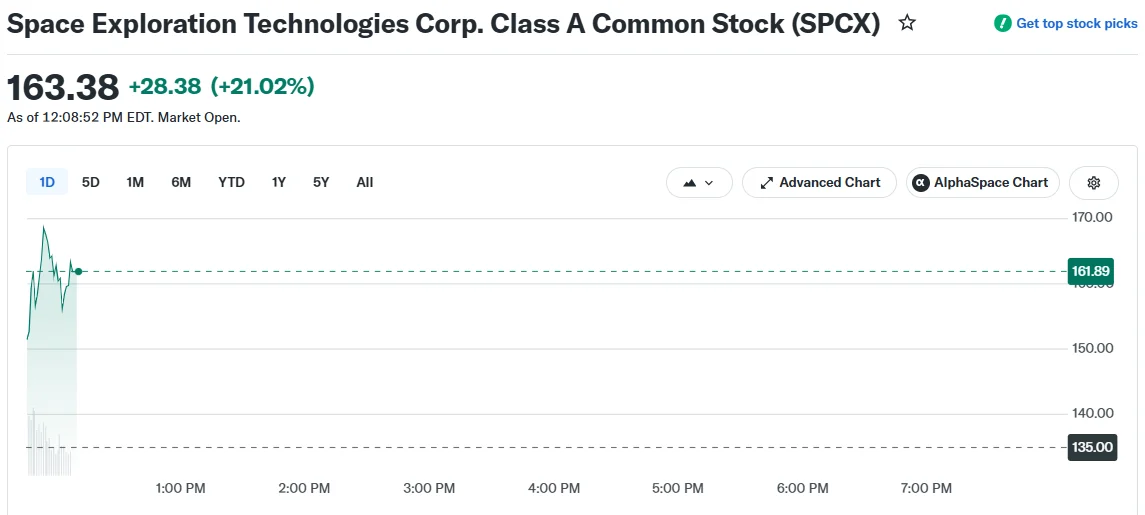
The public offering generated $75 billion in capital, establishing a new benchmark as the biggest IPO ever executed. This figure dwarfs the previous record holder, Saudi Aramco, which raised $26 billion five years ago.
From his location at Starbase in South Texas, Elon Musk participated in a ceremonial bell-ringing to commemorate the trading launch. According to Forbes calculations, the listing pushed Musk’s personal wealth beyond the $1 trillion threshold, establishing him as humanity’s first trillionaire.
SpaceX set the share price at $135 and issued 555.56 million shares to the public. Reports suggest retail investor demand exceeded $100 billion, while BlackRock submitted a single institutional purchase order worth $5 billion.
Breaking from convention, the aerospace company reserved 30% of available shares for individual retail investors, a rare allocation in offerings of this magnitude. Management also bypassed the standard roadshow presentations investment banks normally conduct to assess market appetite.
Core Business Operations
Established in 2002, the company’s stated objective centers on establishing human presence across multiple planets. The Starlink broadband internet system now provides connectivity to subscribers in 164 nations and generates approximately 60% of the firm’s $18.67 billion in 2025 revenues.
According to company disclosures, SpaceX launches have represented over 80% of total orbital payload mass during the preceding three years. The Starlink network currently maintains service for around 10.3 million customers through a constellation comprising 9,600 active satellites.
Early in 2026, SpaceX finalized a combination with Elon Musk’s artificial intelligence venture xAI. Oppenheimer emerged as the first prominent financial institution to publish coverage, assigning an outperform recommendation with a $190 price objective. New Street Research established a 12-month valuation target at $165.
Goldman Sachs forecasts envision AI-related revenues potentially expanding 100-fold to reach $322 billion by 2030, though analysts acknowledge substantial uncertainty surrounding these projections.
Skeptical Perspectives
Critical voices question whether current valuations reflect fundamental economics. Morningstar assigned SpaceX an intrinsic value of merely $63 per share, characterizing the public offering as “significantly overvalued.” Finance professor Aswath Damodaran calculated enterprise value at $1.22 trillion, substantially below the IPO-implied valuation.
Prominent short seller Jim Chanos declared the company doesn’t merit a $1.75 trillion valuation “based on any reasonable assumptions.” He observed SpaceX currently trades at approximately 90 times sales, contrasting sharply with Tesla’s 14 times multiple.
Financial statements reveal SpaceX recorded a $4.94 billion net loss during 2025, reversing the $791 million profit generated in 2024. The deficit followed the xAI combination. Revenues climbed 33% compared to the prior year.
Elon Musk maintains an estimated 80–85% of voting authority, substantially limiting public shareholder influence. Pension administrators in California and New York submitted correspondence opposing the offering’s governance framework, highlighting super-voting share classes and compulsory arbitration replacing traditional shareholder litigation rights.
S&P Global rejected requests to expedite SpaceX entry into the S&P 500 index, suggesting passive fund inflows may materialize more gradually than certain market participants anticipated. Nasdaq modified its regulations to permit accelerated inclusion in Nasdaq-affiliated index products, with qualification potentially occurring within 15 days following the listing.
The post SpaceX (SPCX) Goes Public: Elon Musk Hits Trillion-Dollar Net Worth Milestone appeared first on Blockonomi.
news
War shock reshapes central-bank calculus: downside for growth, upside for inflation, making precautionary rate increases an option for the coming months. As for today, the ECB and Bank of England are seen keeping rates unchanged. (Published on 30 April 2026)
Meta, Amazon, Microsoft, and Alphabet earnings split tech stocks as AI spending concerns weigh on the Nasdaq 100 and shape the stock market outlook.


